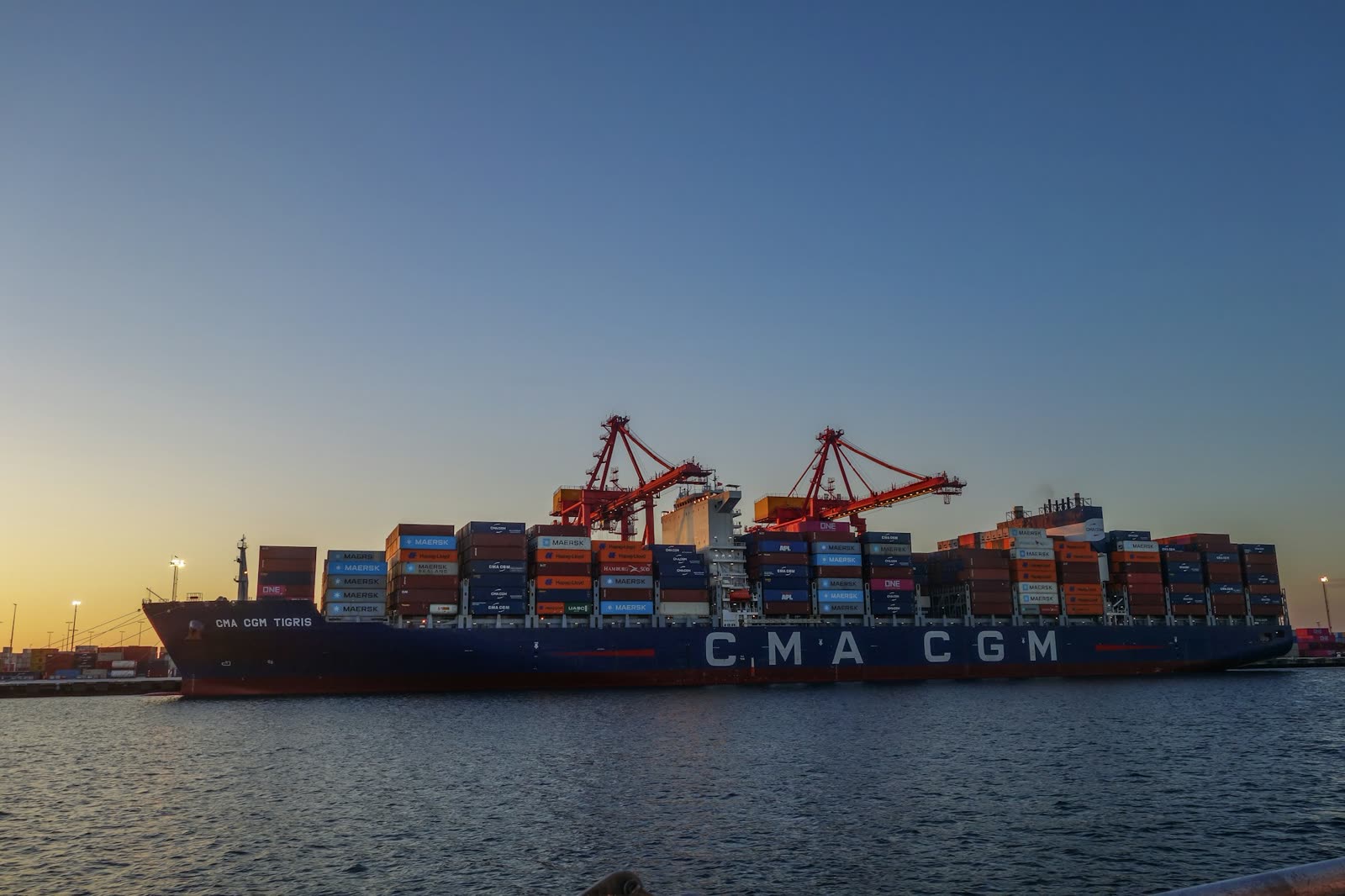
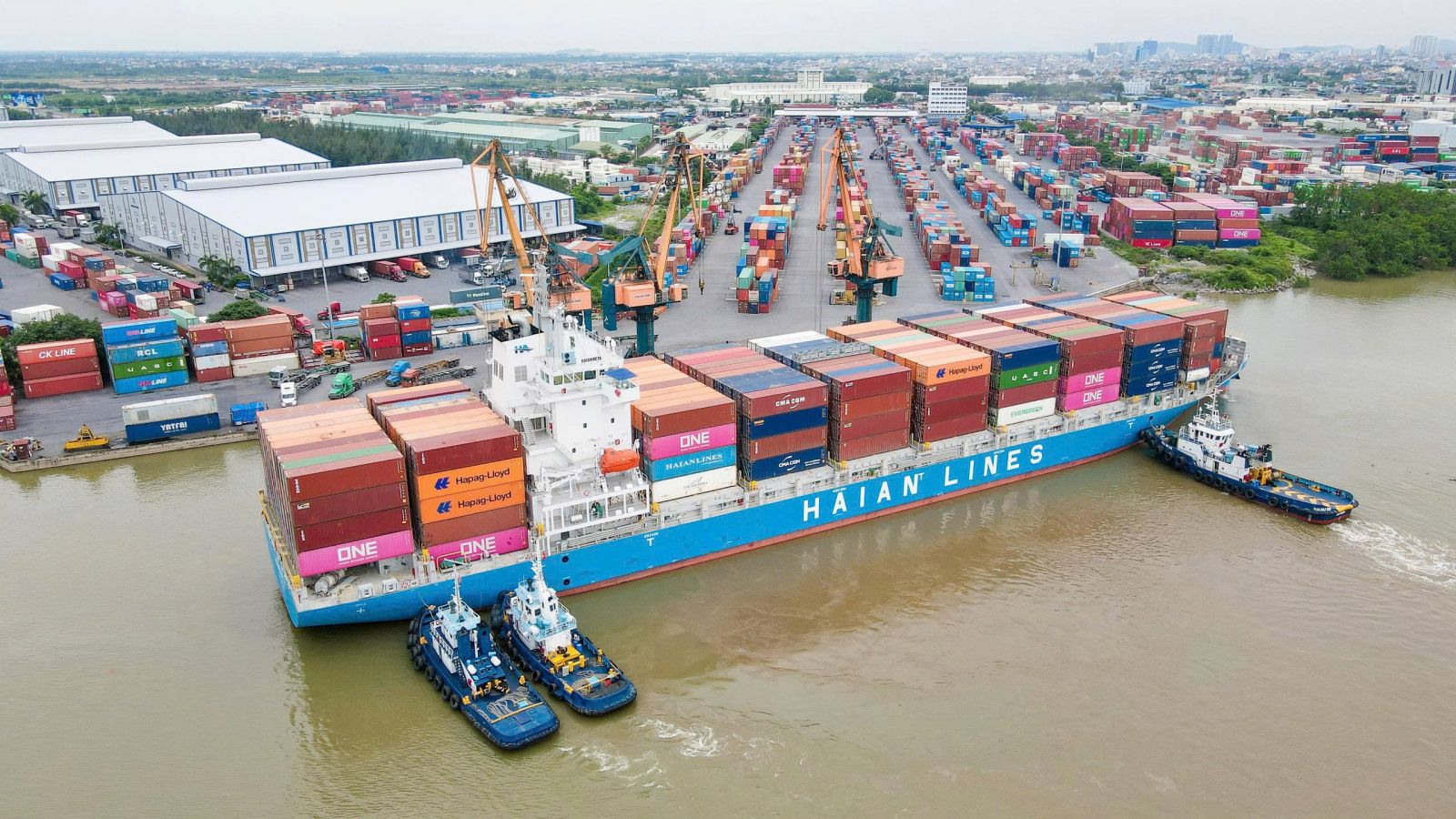
Vietnam's Hai An orders two 1,928 TEU feeders from China
Plan on small 1,340 TEU, because on these loops the weight limit comes first.
What the two ships actually run on, what they lift at real cargo weights, and why their one electric feature depends on the ports.
Vietnam's Hai An will spend up to $70m on two 1,928 TEU feeder ships due in late 2029. They run on a diesel engine, so the useful number is what they lift at 14 tonnes a box, about 1,343 TEU. Their one electric feature, a shore-power plug, pays only where ports supply power.
Hai An Transport and Stevedoring, Vietnam's largest container line, has approved up to $70m for two 1,928 TEU feeder ships. They come from Guangzhou Wenchong Shipyard in China. The first is due by 31 October 2029 and the second by 30 November. At least one trade headline called them electric. Anyone who will plan cargo on these ships should work with about 1,343 TEU.
The specification Hai An disclosed describes a diesel ship. As Container News reports it, the main engine is a MAN B&W 6S60ME-C10.5 two-stroke. Selective catalytic reduction brings it to IMO Tier III, and there is a scrubber as well. There is no battery to charge, so rotation length and charging stops decide nothing. The one electric part is a shore-power connection.
That means the ships get planned like any other diesel feeder. On Hai An's routes, a feeder is planned by weight. The filing puts each ship's lift at about 1,343 TEU at an average of 14 tonnes per TEU. That is roughly 70% of nominal.
Hai An already measures its fleet by weight. Shinhan Securities Vietnam reported that the fleet runs at 90 to 95% of deadweight on domestic and intra-Asia routes. On those loops a ship reaches its weight limit before it fills its slots. For the stowage planner and the slot desk, 1,343 is the working figure.
That leaves the plug, and its value is decided ashore. A shore connection saves fuel and emissions at the berth only where the terminal supplies power at the ship's voltage and frequency. The ship brings the socket, and the terminal has to bring the power.
The thing to check is whether any berth on the pair's loop can supply shore power by late 2029, when the ships arrive. If none can, the plug goes unused.
Primary sources
- Hai An Transport & Stevedoring (HAH): Benefiting from sustained high charter rates Shinhan Securities Vietnam, 2026-08-13