Supertanker prices chase Hormuz freight, and old hulls gain most
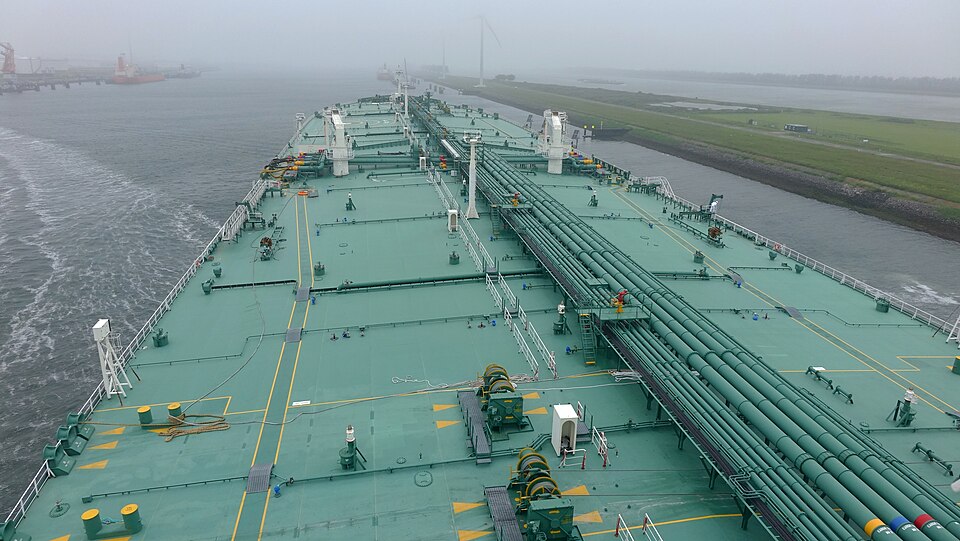
The $135m bet on how long Hormuz stays broken
Why fewer barrels out of the Gulf need more ships, and what a buyer of a 15-year-old tanker is betting on at September prices.
Supertanker earnings are at record levels because the crisis in the Strait of Hormuz ties up more ships for every barrel moved. Few owners will work the Gulf, so a ship that can trade now is worth what it earns before the crisis ends. That is why 15-year-old ships gained most, and why they have the most to lose if tensions ease.
Earnings for very large crude carriers (VLCCs, the two-million-barrel supertankers) reached $722,946 a day on 18 September, on the Baltic Exchange's VLCC time-charter average. A year earlier the same index stood at $79,700. That is a rise of 807 percent.
Second-hand prices have followed, and the oldest ships have gained most. A 15-year-old VLCC is up about 62 percent in ten weeks. The cause is the crisis in the Strait of Hormuz, which ties up more ships for every barrel moved. The price of an old ship is now a bet on how long that lasts.
The asset figures come from the broker Xclusiv Shipbrokers, in its weekly report of 21 September. Between 10 July and 18 September, a five-year-old VLCC rose from $145 million to $172 million. A ten-year-old rose from $115 million to $152 million. A 15-year-old went from $83.5 million to $135 million.
Buyers are also reaching for older ships. Of 103 VLCC sales between January and mid-September, 43 were aged 11 to 15 and 32 were aged 16 to 20.
The average ship sold in September was about 18 years old, against 13.6 in August. Xclusiv's example is the 2008-built Rain Cubic, sold this month for about $90 million. The 2007-built DHT Europe fetched $51 million in January.
Fewer barrels, more ships
The crisis has cut the crude leaving the Gulf. On its own, that should have hurt tanker rates. It has lifted them instead, because each barrel now takes more ship time.
In mid-September, Lloyd's List reported that only South Korea's Sinokor and a handful of smaller owners were still sending VLCCs through the strait.
Much of the Gulf's crude now moves on shuttle tankers. They run out through Hormuz and discharge by ship-to-ship transfer off Fujairah in the UAE and Sohar in Oman. A second ship then carries the oil on to Asia.
Kpler puts those transfers at 7.2 million barrels a day so far in September. In 2025 the figure was 0.16 million. Every one of those barrels is lifted twice. Kpler reports the shore support at both ports running at or near its limit.
Loading is erratic as well. Some days 10 million barrels move and some days none, so ships wait for cargo that does not come. The London broker Gibson estimates that the Gulf and the Gulf of Oman now hold more VLCCs than before the war, carrying fewer barrels.
Then on 10 and 11 September, attacks shut Saudi Arabia's East-West pipeline to Yanbu, its Red Sea export port. Ships sent to load there were left in ballast. Saudi crude began shifting back to the Gulf coast and the strait.
Three things decide which ships will work the Gulf, and all three are tight.
The first is war cover. In July it was quoted at 7.5 to 10 percent of hull value.
The second is crew. The International Transport Workers’ Federation and the shipowners’ Joint Negotiating Group designated the strait a warlike operations area; the designation was confirmed in force at least until 24 September 2026, with further extensions subject to mutual consent and weekly review. On ships covered by their agreements, crew may refuse to sail in and are paid a 100 percent bonus while inside.
The third is the owner, who has to accept the risk of attack. Each filter takes ships out of the pool that can actually work the Gulf. The rate is set by the size of that pool.
What a buyer of an old hull is paying for
A ship that can work in that pool is worth what it earns before the disruption ends. At the 18 September rate, a VLCC earns $135 million, the price of a 15-year-old, in about six months. The index is net of fuel and port costs, but not of crew, maintenance or finance.
On the same arithmetic, the $51.5 million a 15-year-old gained since July is about ten weeks of earnings. So the buyer is paying for time on the water now.
By gCaptain's reckoning, a 15-year-old now changes hands at roughly what a new VLCC costs to order. A newbuilding ordered today would not deliver for years , and the crisis may be over by then. The old ship trades from next week.
The earning window is the same for every age. The oldest ships started from the lowest price, so they gained most in percentage terms.
That logic is sound. For it to pay, three things have to hold.
- The rate lasts. At last year's $79,700 a day, $135 million takes more than four and a half years of earnings to recover, before running costs. New ships are also coming. According to Veson Nautical data cited by gCaptain, owners ordered 183 VLCCs in the first half of 2026, against 18 a year earlier. Those ships arrive whatever happens in the strait.
- The ship stays employable. Oil-major vetting gets harder past 15 years, and ships this age face their third special survey. Every day in a yard is a day of this rate lost.
- War cover grows with the price. The premium is a percentage of hull value. If the buyer insures at the price paid, 7.5 to 10 percent comes to $10 million to $13.5 million per transit. On the July value it was $6.3 million to $8.4 million. At today's rate the new premium is under three weeks of earnings. At last year's rate it would be more than four months.
Xclusiv makes the same point in one line: any de-escalation around Iran could trigger a correction. The price of an old VLCC is a price on how long Hormuz stays like this.
How long the Hormuz premium lasts
Freight has not answered that yet. The Middle East to China route touched about $1.2 million a day in the week to 21 September, a record. Kpler's Matt Wright thinks freight may have peaked as refining margins in Asia cool. He also thinks the inefficiency in the Gulf keeps the floor high.
The signal to watch is a second mainstream owner resuming direct transits and not being hit. US Central Command says the transit lanes are clear of mines, which is the precondition.
If direct transits rise while transfers off Fujairah and Sohar fall, the shuttle system unwinds. The ships it absorbed come back to the market. The old hulls gained most on the way up, and they have the most to give back.
Primary sources
- officialJoint ITF–JNG Statement: Warlike Operations Area in Strait of Hormuz continues under weekly review International Transport Workers' Federation, 2026-06-30
- Saudi export rerouting amid Gulf of Oman STS bottlenecks amplify VLCC intensity of MEG flows Kpler
- VLCC freight may have peaked, but Hormuz keeps the floor high Kpler
- Xclusiv S&P Report 21th September 2026 Xclusiv Shipbrokers (via Maritimes.gr), 2026-09-21