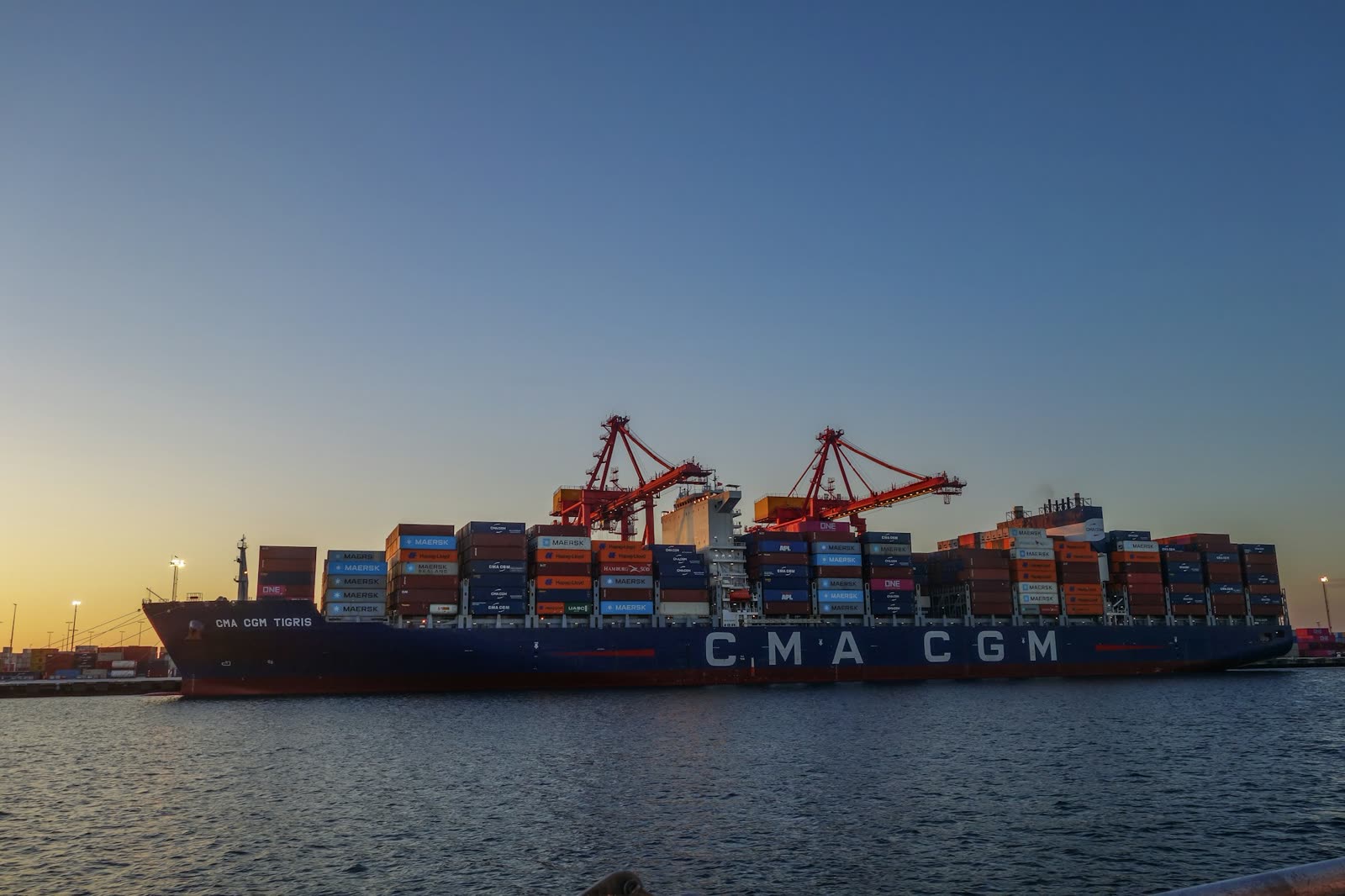
World Shipping Council: one in ten inspected containers failed in 2025

More than four fifths of what inspectors find is placards, labels and the way cargo sits in the box.
What the deficiency mix says about where the failures are made, and why booking-side screening is aimed slightly to the left of them.
Seven countries inspected over 93k containers in 2025 and failed 10% of them. Those seven are the entire global dataset, and the inspectors target boxes that already look risky. Most faults were placards, labels and how cargo sat inside the unit, which is packing-yard work that no booking record describes.
The World Shipping Council published the 2025 results of national container inspection programmes on 14 September 2026. Authorities in seven countries inspected 93,079 cargo transport units and found deficiencies in 9,645 of them. That is 10.36%, down from 11.39% in 2024 and up from 6.54% in 2019. Seven countries is the entire global picture, because nobody else reported.
The seven are Chile, Finland, Germany, the Kingdom of the Netherlands, the Republic of Korea, Sweden and the United States. The IMO has more than 170 member states. It stopped publishing the consolidated report itself in 2024, which is why an industry body is now doing the job.
Joe Kramek, the Council's president, called the rate far too high. He said states have a responsibility to enforce cargo safety rules through inspections. On the face of this dataset, most of them are not.
Seven countries, and a sample chosen on purpose
Read the 10.36% as a hit rate rather than a share of the boxes moving.
The guidelines these programmes run under are MSC.1/Circ.1649, agreed at the IMO's Maritime Safety Committee in April 2022. They tell governments to inspect a representative sample of units, with consideration given to risk-based principles. For undeclared dangerous goods they go further. A targeted selection method should be used to identify general cargo units with a higher probability of carrying them. Inspectors are told to spend their time where the risk history is.
That is the right way to run a small inspection budget, and I would not want it run any other way. It does mean the number describes boxes that were picked because something about them looked wrong. It does not describe the population of containers moving through those ports.
It also makes the year-on-year line soft. The rate moves when a national targeting model improves as readily as when packers get worse.
The more useful half of the release is what those targeted inspections found once the doors were open.
What the booking desk can see
The Loadstar's reading of the underlying data puts incorrect marking and placarding at 46% of findings. Stowage of cargo inside containers and trailers accounts for 26%. Incorrect marking or labelling of the packages inside the unit is over 10%.
Take that at face value and more than four fifths of what inspectors find is placards, labels and the way cargo sits in the box.
I spent years building the systems that take these bookings, and I want to be precise about what they hold. A dangerous goods booking is structured data: UN number, class, packing group, flashpoint, net and gross quantity. All of it is validated against the IMDG Code before the booking is confirmed. Verified gross mass has been a shipper obligation under SOLAS since 2016, and no competent system loads a box without one. The commodity description on a general cargo booking is free text, and it always has been.
So screening has something to work with. The Council's Cargo Safety Programme, launched on 15 September 2025 and run on National Cargo Bureau technology, works exactly there. It scans bookings for keywords, trade patterns and risk indicators. Carriers holding close to 80% of global capacity have joined.
That is a real control and it catches a real failure: the lithium cells booked as machinery, the reactive chemical booked as resin. It catches almost none of what these inspections found.
No field on a booking says whether the packer used blocking and bracing. None says whether four placards went on. None says whether the drums inside carry their own labels. That work happens in a packing yard the carrier never sees, hours or days after the booking was accepted and validated clean. A container can screen green at booking and fail at the gate with nothing wrong with the screening. The two controls sit in different places.
Four things would have to be true for the booking screen to reach these failures. None of them are yet.
- The deficiency categories would have to be ones a declaration can predict. Placarding is not one.
- The deficiency report would have to come back to the carrier that took the booking, with the booking reference attached, fast enough to matter. Today it goes to the authority and into the IMO's shipping information system in aggregate.
- Enough states would have to inspect that a bad packer is caught more than once.
- There would have to be a consequence for the packer, who in most of these cases is not the carrier's contractual counterparty at all.
The CTU Code carries no penalty
The rules that packer is supposed to follow sit in the CTU Code, the code of practice for packing cargo transport units, endorsed in 2014. It is not mandatory.
That single fact decides how to read every statistic these programmes produce. A deficiency here is a symptom rather than an offence, and nobody is being detained for it.
A restructured version has been expected to reach final endorsement, according to the National Cargo Bureau's chief operating officer, writing in an industry newsletter in September 2026. Endorsement of a code of practice changes nothing by itself.
Three things would. The first is whether the 2026 reporting round carries more than seven states, which is the only way this dataset becomes a measurement rather than an indicator. The second is whether any national authority makes inspection of cargo transport units compulsory rather than resource-permitting. The third is whether the Cargo Safety Programme starts publishing what its screening actually stops. A hit rate drawn from 80% of world capacity would be the first number in this story that describes the whole fleet rather than the boxes somebody already suspected.
Primary sources
- officialOne in ten inspected cargo units found with safety deficiencies World Shipping Council, 2026-09-14
- officialCargo Safety Program World Shipping Council, 2026-09-20
- officialWorld Shipping Council reinstates cargo inspection deficiency data, urges stronger safety measures World Shipping Council, 2025-09-01
- Guidelines for the implementation of the inspection programmes for cargo transport units, MSC.1/Circ.1649 IMO (via IMO Rules), 2022-04-29
- The CTU Code, fixing cargo securing failures IUMI / National Cargo Bureau, 2026-09-01