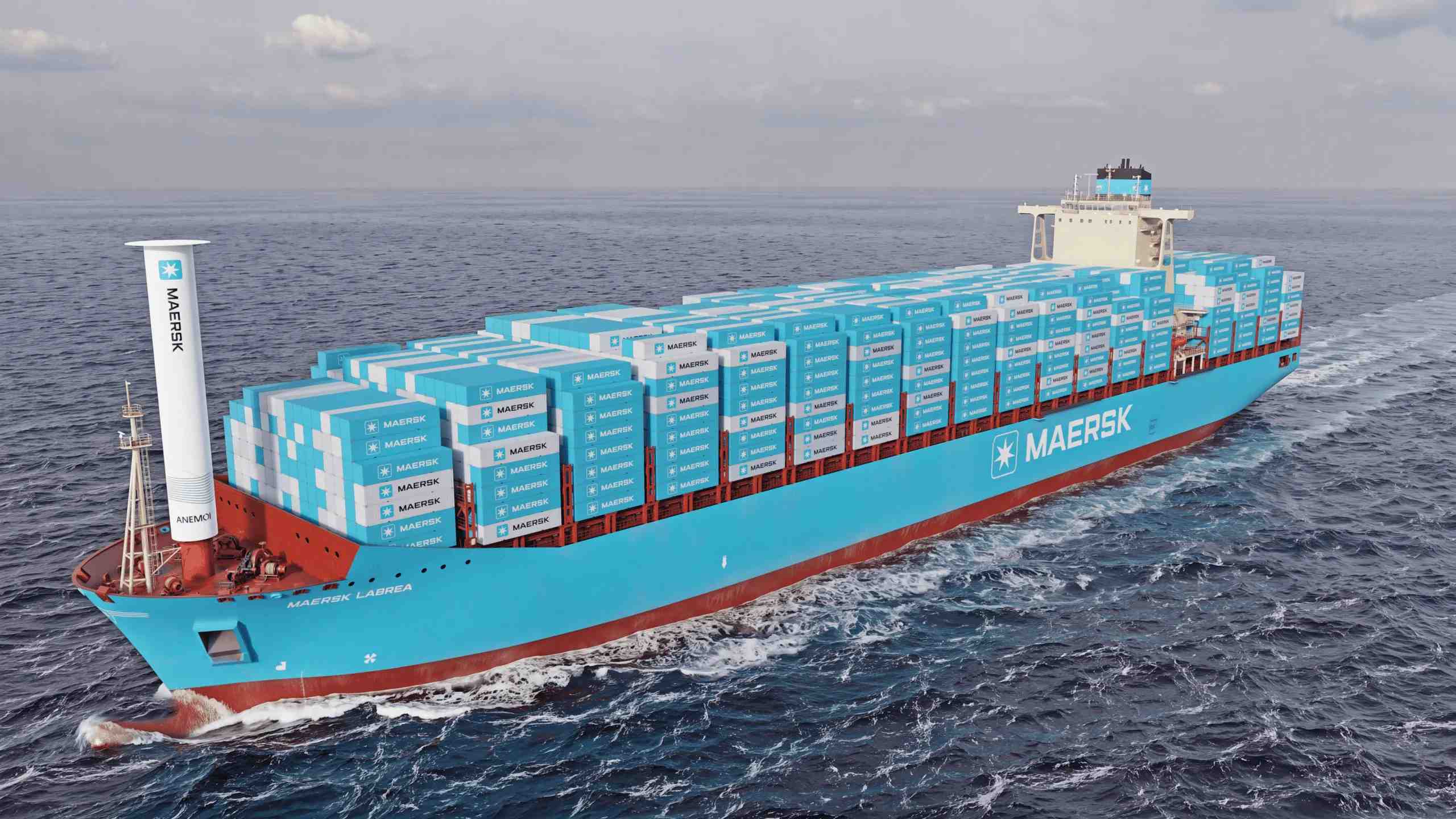
Maersk's first rotor sail on a container ship
...but is this actually going to affect the freight?
One fixed rotor at the bow of an 8,700 TEU ship costs almost no cargo space, and that is exactly why it will say little about the harder question of fitting several.
Maersk will fit one wind rotor near the bow of an 8,700 TEU ship in 2027. That spot carries no cargo, so the ship gives up little, and the fuel saving will also be small. The pilot shows whether wind pays on a liner schedule. The real cargo cost only comes if Maersk wants several rotors per ship.
A.P. Moller-Maersk has picked Anemoi Marine Technologies, a British company, to supply a rotor sail for one of its Lima-class container ships. The ships carry about 8,700 TEU. The rotor is 5 metres in diameter and 35 metres high. It is fixed rather than folding. It will be fitted in mid-2027 and tested in normal service on North and South Atlantic routes.
Both companies say it is the first rotor sail on a container ship. Rotors have run on bulk carriers and tankers for years. What matters here is what a container ship has to give up to carry one.
Why the bow, and why only one
Container ships have stayed out of wind-assisted propulsion because deck space is cargo space. Every square metre over the hatches earns freight.
Bulk carriers and tankers get round this with rotors that fold or slide on rails during cargo work. A container ship at a gantry crane cannot do that.
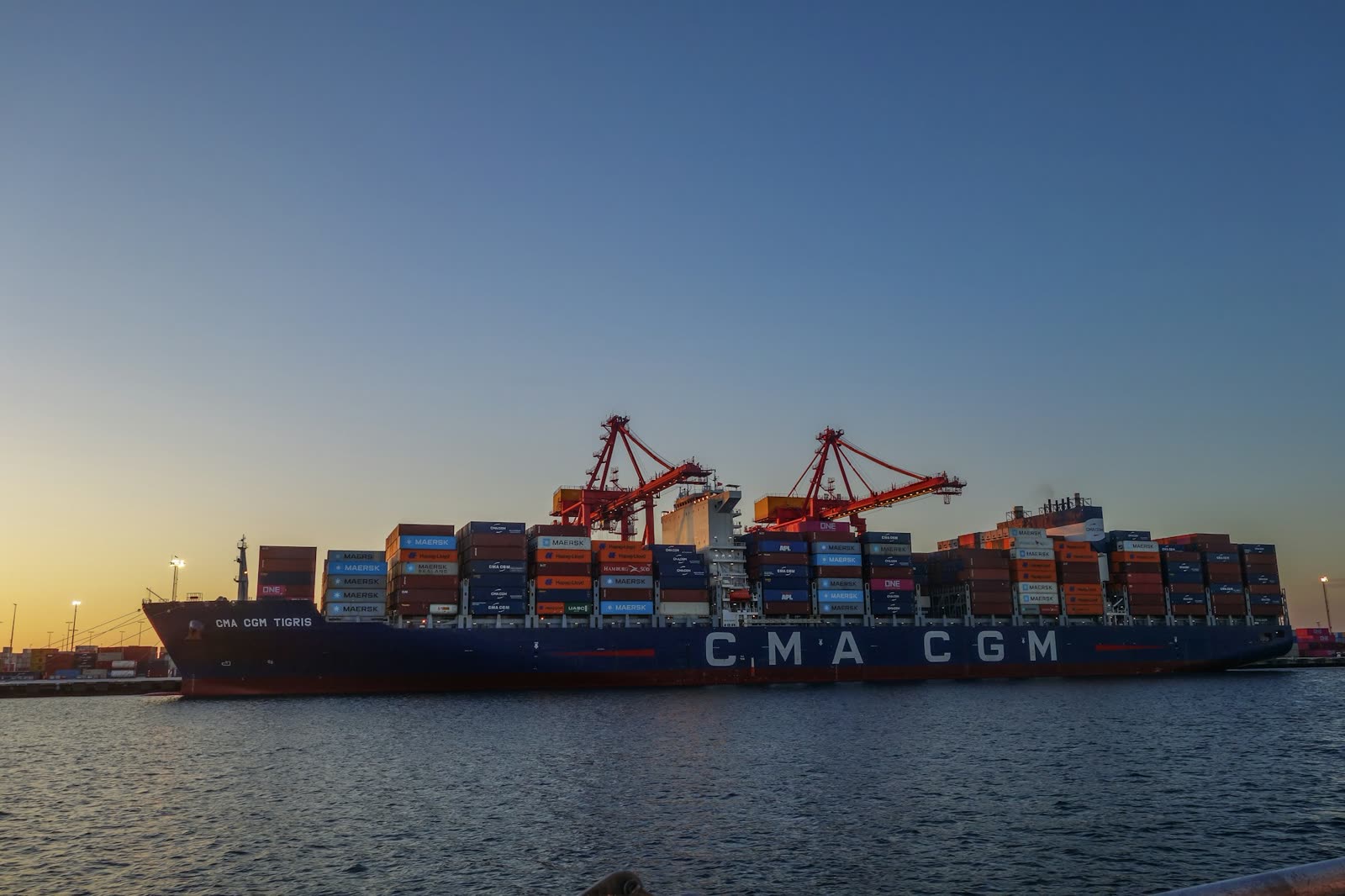
Maersk's answer, is to put a fixed rotor near the bow. The Lima class is 16 ships, built by Daewoo in Korea from 2011, each 300 meters long. On these ships the forecastle holds mooring gear and the breakwater. It holds no containers. A fixed rotor there needs no folding mechanism and takes little or nothing from the stow.
What a bow rotor changes on board and at the berth
If the placement is as reported, the list of changes is short, and it is what you would expect for any new structure on the forecastle.
- Stowage planning. Bay 2 keeps its slots unless the foundation or a clearance zone takes some of its forward rows. The planner already treats the bow stacks carefully because of forward visibility and green water. A rotor there changes little in that picture.
- Loading computer and stability. A structure and a large new wind area high up at the bow go into the lightship data and the wind-heeling calculation. This is an update to the approved loading instrument, done once, with class. The lashing calculation works on stack accelerations and hardly moves.
- Bridge visibility. SOLAS limits blind sectors ahead of the bridge... I could not find whether Chapter V Regulation 22 limits apply as a new obstruction on an existing ship. A 5 metre cylinder a couple of hundred metres ahead of the wheelhouse takes a narrow slice of the view. The flag and class will still want that slice drawn and approved.
- Mooring. The forward mooring party now works around a rotor foundation, among the windlasses and winches. This is a matter of layout and a toolbox talk.
- Draft and Air Draft.This rotor structure might force vessels to maintain an even keel, limiting their ability to trim by the stern when extra air draft is needed and reducing the planner’s margin for certain port calls, such as passing under bridges where a few meters of extra air draft can determine whether the vessel can pass safely.
- Terminals. The fixed top of the rotor stands well above the deck. A quay crane working bay 2, or moving along the berth with its boom down, needs to know it is there. This is a planning-sheet item. It is unlikely to be a port-acceptance problem.
None of these is serious, and the reason is the placement. Maersk has put the rotor where it costs the least.
A small saving, measured on a liner schedule
The placement that keeps the cost down also keeps the saving down. Anemoi says a typical rotor saves about one tonne of fuel a day. A 300 metre container ship on an Atlantic service burns many times that.
One rotor will produce a saving you can measure. It will not change the voyage economics.
Maersk's earlier rotor trial was on a product tanker, with two rotors from another supplier, Norsepower. Splash247 reports that it gave verified savings of 8.2 percent over a year. That was a different hull type, with more rotors for the size of ship.
So what this pilot can show is whether wind pays on a liner schedule, in normal service. That is a useful answer this pilot will tell.
The second and third rotor
Maersk says it will use the pilot data to decide whether the technology has wider relevance across the fleet. That is where the question the coverage skipped begins.
Anemoi usually fits three to five rotors per ship. A container ship has one forecastle. Any rotor behind it stands where boxes go, or on a lashing bridge, or needs the rail system that cargo operations make awkward.
Only then do slot loss, bay-plan changes and crane clearance start to cost real money. That cost is not in this announcement.
What would show this is more than a pilot: a class approval for a rotor arrangement aft of the forecastle on a container ship, or a Maersk newbuilding specification that allows for rotor foundations in the deck layout. Until one of those appears, this is one well-placed rotor collecting data, which is a sensible way to start.
Primary sources
- officialAnemoi Marine Technologies and Maersk to deliver world first as Rotor Sails set for container shipping Anemoi Marine Technologies, 2026-09-01