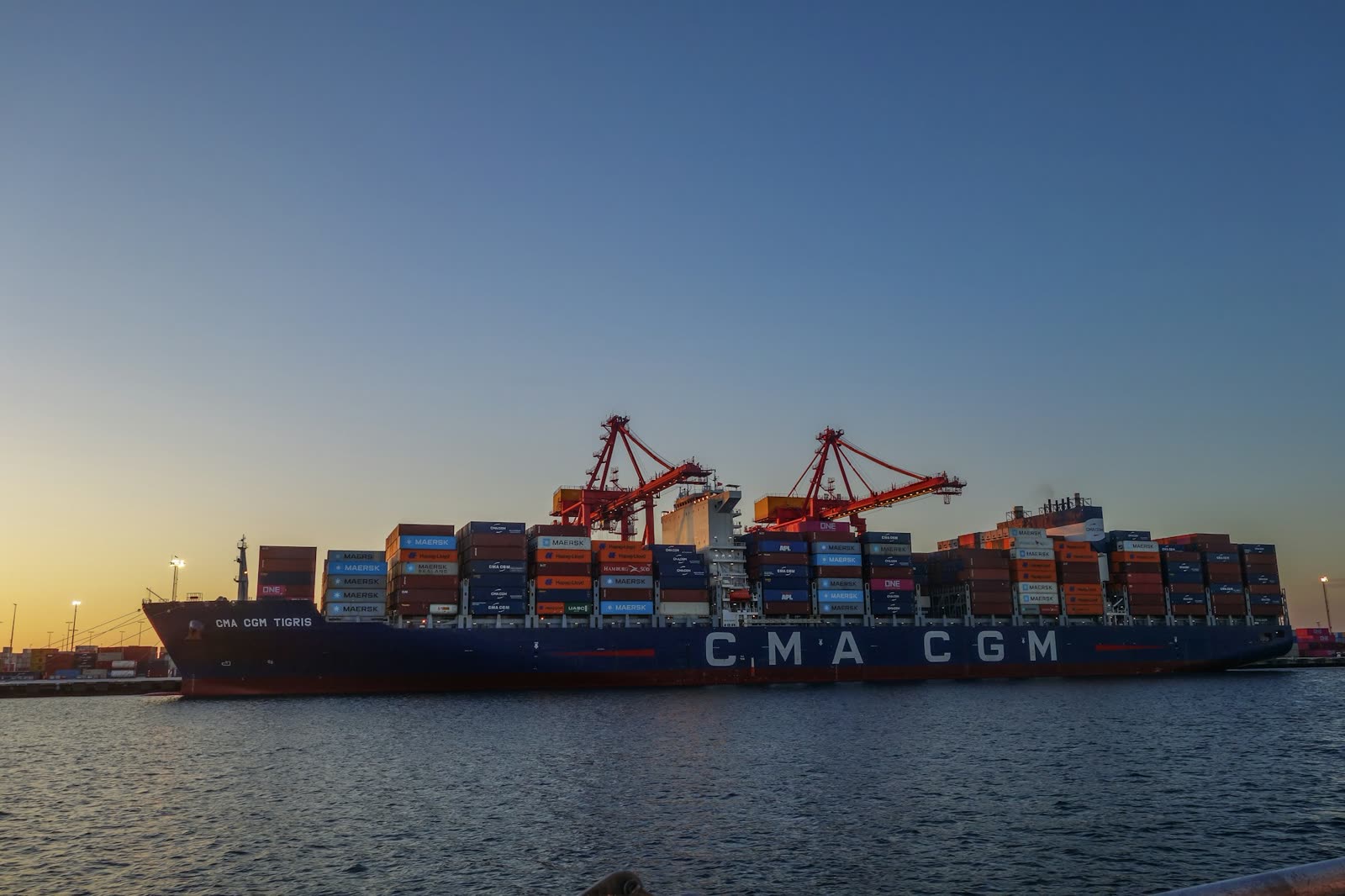
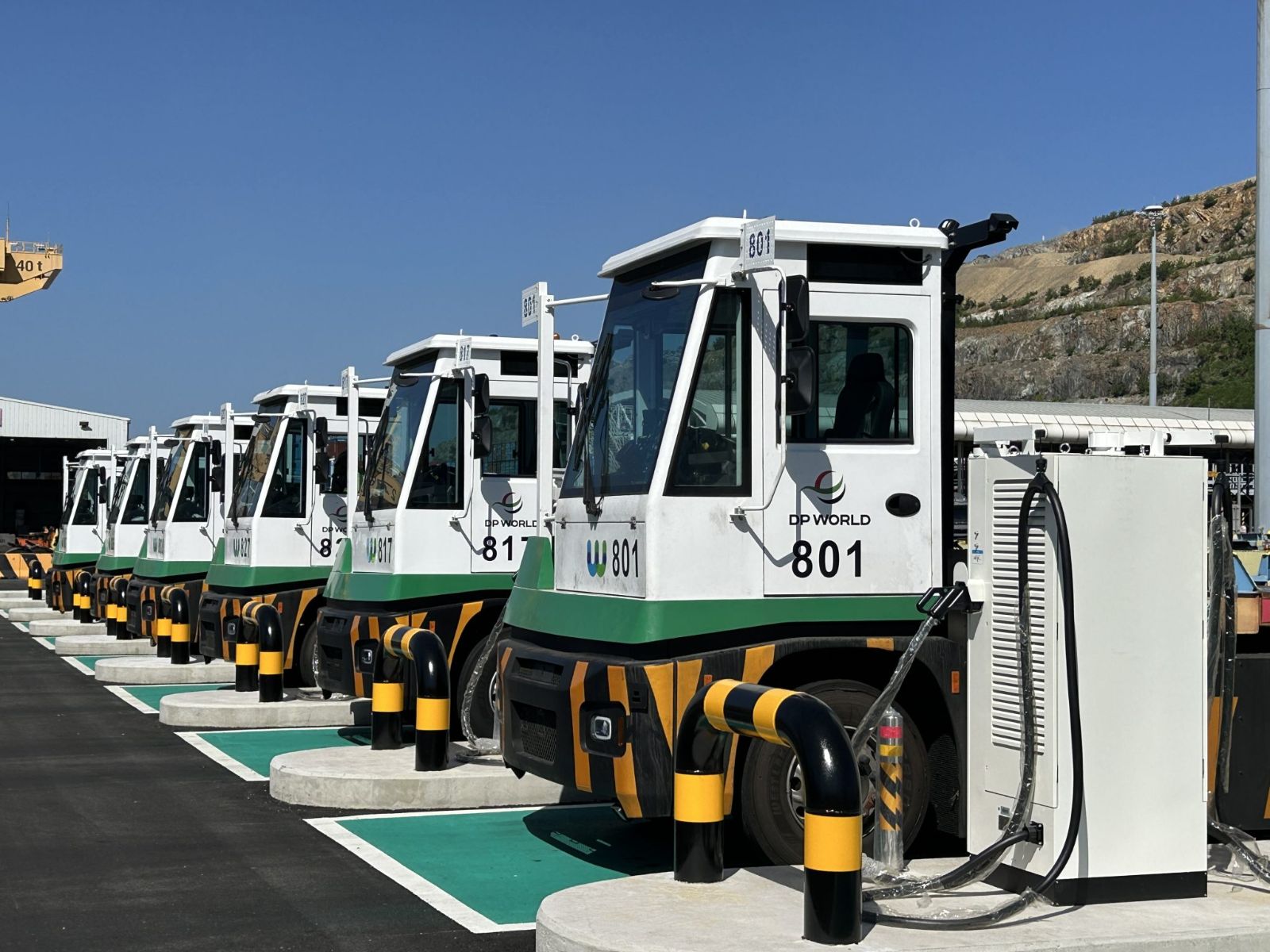
DP World puts 55 electric yard tractors to work in Busan
What happens when the gas tractors left can no longer cover the busiest shift?
DP World's release covers emissions and maintenance, and this covers what it leaves out: where the charging time comes from when the berths are full.
DP World has swapped 55 of the 154 gas-powered yard tractors at its terminal in Busan, South Korea, for electric ones. Each electric tractor must leave crane work to charge, so charging now has to be planned around the busiest vessel shifts. The 99 gas tractors still cover the peaks. The test comes as the electric share grows.
DP World has put 55 battery-electric yard tractors into service at its container terminal in Busan, South Korea. They replace tractors that ran on liquefied natural gas, and they make up about 36% of a fleet of 154. The release covers emissions, noise and maintenance. It does not say how the tractors are charged, and charging is what changes how the terminal plans its vessel work.
A yard tractor is the link between the quay crane and the stack. Each working crane has a set of tractors assigned to it. When they run short, the crane waits. An LNG tractor goes back into its gang after a refuelling stop. A battery tractor is out of the gang for as long as it is on the charger. So the shift plan now has to allocate charging time, the same way it allocates cranes and drivers.
The easy slots for charging are shift changes, meal breaks and the hours when fewer berths are working. The busy windows are harder. Busan is one of the world's largest transhipment hubs. A transhipment box moves by internal tractor twice, once off the ship and once back on, with no outside truck involved. When several large ships are alongside together, every tractor in the pool is working.
The 99 LNG tractors are what make this work today. They carry the crane gangs through a peak while the battery units charge in the quieter hours. With 36% of the fleet electric, charging is a scheduling job, and a manageable one.
That margin gets smaller with each new batch of electric tractors, and DP World says Busan will keep adding electric equipment. The busiest shift needs a certain number of tractors. Once the LNG units left in the fleet fall below that number, some battery tractors have to work the whole peak on the charge they started with. From then on, the battery has to last the longest peak the berth schedule produces, with margin. The chargers also have to turn the fleet around inside the quiet windows.
None of this argues against the move. Replacing just over a third of the fleet while the rest stays on gas is the sensible order. It lets the terminal learn its charging pattern against real vessel schedules before the cover runs out.
The thing to watch is the electric share after Busan's next order. If it goes past half, up from 36% today, the charging plan has survived the terminal's busiest weeks. If it stalls near a third, that would suggest the peak shifts are setting the pace.
Primary sources
- officialDP World deploys 55 electric yard tractors at South Korea's Busan terminal DP World, 2026-10-16
- Korea Emissions Trading Scheme International Carbon Action Partnership